Everest Base Camp Trek: The Ultimate Adventure Guide

Horizontal orange line
Everest Base Camp Trek: The Ultimate Adventure Guide


KATHMANDU, Nepal: Few trekking experiences in the world carry the prestige, history, and sense of achievement associated with the Everest Base Camp Trek. Renowned as one of the planet’s most iconic high-altitude adventures, the journey leads travelers deep into Nepal’s legendary Khumbu region, culminating at the base of Mount Everest, the highest mountain on Earth.

Combining spectacular Himalayan scenery, centuries-old Buddhist heritage, and the rich traditions of the Sherpa people, the trek offers far more than a physical challenge. It is an immersive journey through one of the world’s most remarkable mountain landscapes, where every step reveals breathtakingz vistas
and profound cultural encounters.


Gateway to the Himalayas

The adventure begins with a dramatic mountain flight to Tenzing-Hillary Airport, often regarded as one of the most scenic and thrilling airports in the world. Surrounded by towering peaks and deep valleys, Lukla serves as the principal gateway to the Everest region.

From here, trekkers follow ancient trading routes that wind through picturesque Sherpa settlements, dense pine and rhododendron forests, and across suspension bridges draped with colorful Buddhist prayer flags. The trail follows the Dudh Koshi River, gradually ascending into the heart of the Himalayas.

Along the route, travelers encounter a landscape where nature and spirituality coexist seamlessly, offering a glimpse into a way of life shaped by both the mountains and Buddhist traditions.


Namche Bazaar: The Vibrant Heart of the Khumbu

A key milestone on the journey is Namche Bazaar, the region’s commercial and cultural hub. Nestled on a natural amphitheater at an elevation of approximately 3,440 meters, Namche Bazaar has long served as a vital trading center connecting Himalayan communities with the outside world.

Today, the bustling mountain town provides trekkers with an essential acclimatization stop while offering modern amenities, traditional markets, museums, and panoramic viewpoints overlooking the surrounding peaks.

It is often here that trekkers catch their first distant glimpse of Everest, a moment that marks the beginning of a deeper connection with the world's highest mountain.


Sacred Landscapes and Sherpa Heritage

Beyond Namche, the trail continues through forests and alpine meadows toward the renowned Tengboche Monastery, the spiritual center of the Everest region.

Perched on a ridge amid some of the most spectacular mountain scenery in Nepal, Tengboche Monastery stands as a testament to the enduring Buddhist traditions of the Sherpa people. The monastery hosts religious ceremonies throughout the year and remains a place of reflection for both local communities and visiting trekkers.

Against the backdrop of snow-covered peaks, including the striking silhouette of Ama Dablam, Tengboche offers one of the most iconic landscapes found anywhere in the Himalayas.

https://images.openai.com/static-rsc-4/S_CE-NJqAcFlKZDfz8QsR7byhYGM4Hn_8u7jGiomzG84rwIaZ8zx8vBU6Hvubc5LDLj8AMyX7muaRWPTORhNAvMl8l4ASqzmo7AFNCW8wQTJ7MJvhzTidPt_rfwN_SnRv9s8_xVjLPXFfSHSnr_ct4EY4UGHphnAZzKHb5Rg_Zcm9m_8VbsTWKHqxv1P88hW?purpose=fullsizehttps://images.openai.com/static-rsc-4/H5S-lgzJ7uYOfPUW2NknH9BAUxNj1iCtrFz98S0p5rJMH5A9knhlsUXOfxZ1KfWJhtuEugVNdod78Ojr_23OMlQ6doCRl8kvmXaVs3Q3a1ZtPc41cOhmGW272vHw51D10HdcS7Ux5btctcUyWDnba2RbzrFISkYh1SH53aVonUz5_Iec-vVT4cmDpexaeB01?purpose=fullsizehttps://images.openai.com/static-rsc-4/TDg9ojUbSGEYCTpiv1MDT1SjkcvsyVXludDz0aIN0Sj-jSWEmwB_EhKF5vQ7uaow80Y_ieqklVcgCzVyYrw7EQQzAT4qwomdO5jtS9OLHRftScfqgN2x-PryTKfkMUqhILaiRXgE1rdyJBcfQ4_jFg560Z5an7ZCXa2YL_RBr9daRYnbw7zVaSDGkxyz4yp1?purpose=fullsize
 

Into the High Himalayas

As the trail ascends beyond the tree line, the environment becomes increasingly dramatic. Vast glacial valleys, rugged moraines, and towering ice-covered peaks dominate the horizon, creating a landscape that feels both remote and awe-inspiring.

Throughout the journey, trekkers are rewarded with extraordinary views of some of the world’s most celebrated mountains, including:

  • Mount Everest (8,848.86 m)
  • Lhotse (8,516 m)
  • Nuptse (7,861 m)
  • Ama Dablam (6,812 m)

These towering summits form one of the most dramatic mountain panoramas on Earth, attracting mountaineers, photographers, and nature enthusiasts from around the globe.


Reaching Everest Base Camp

https://images.openai.com/static-rsc-4/eqaodj-g9atbhNGsjtxHNwXgdRhN3xjrG54xpL9_jdYQUZQHFTnJGPh4QtzbYqBw1vUVADfHqOMioOdxrD6lwfj2aFhV0cEBu_4HEaywv6elJ_3j0FElTg6GuVAOnXcKsadLvJFncAH8Rospggk20G_njbot1nZrqjI_GLvXpnXNrVcKbr2bw4R3l7cpetGe?purpose=fullsizehttps://images.openai.com/static-rsc-4/K80aXQEHNK9O16MIIiGjCNZuOmhhwsGxWAnlb1B6RxZHCn4u_62VMZYfNA1aBxLr49hwp2FHA0PgmcSWY1BnRhKKHk9PkSDZZypkS14d6ZWjaxlK8uz7BLSHRe69G6kZif_HuA95ZKjUxmPbFdQGtZ9XIN-iCs0L0Ww6he3K9T1a2910FG3PtsW2Tgh5C9Y6?purpose=fullsize


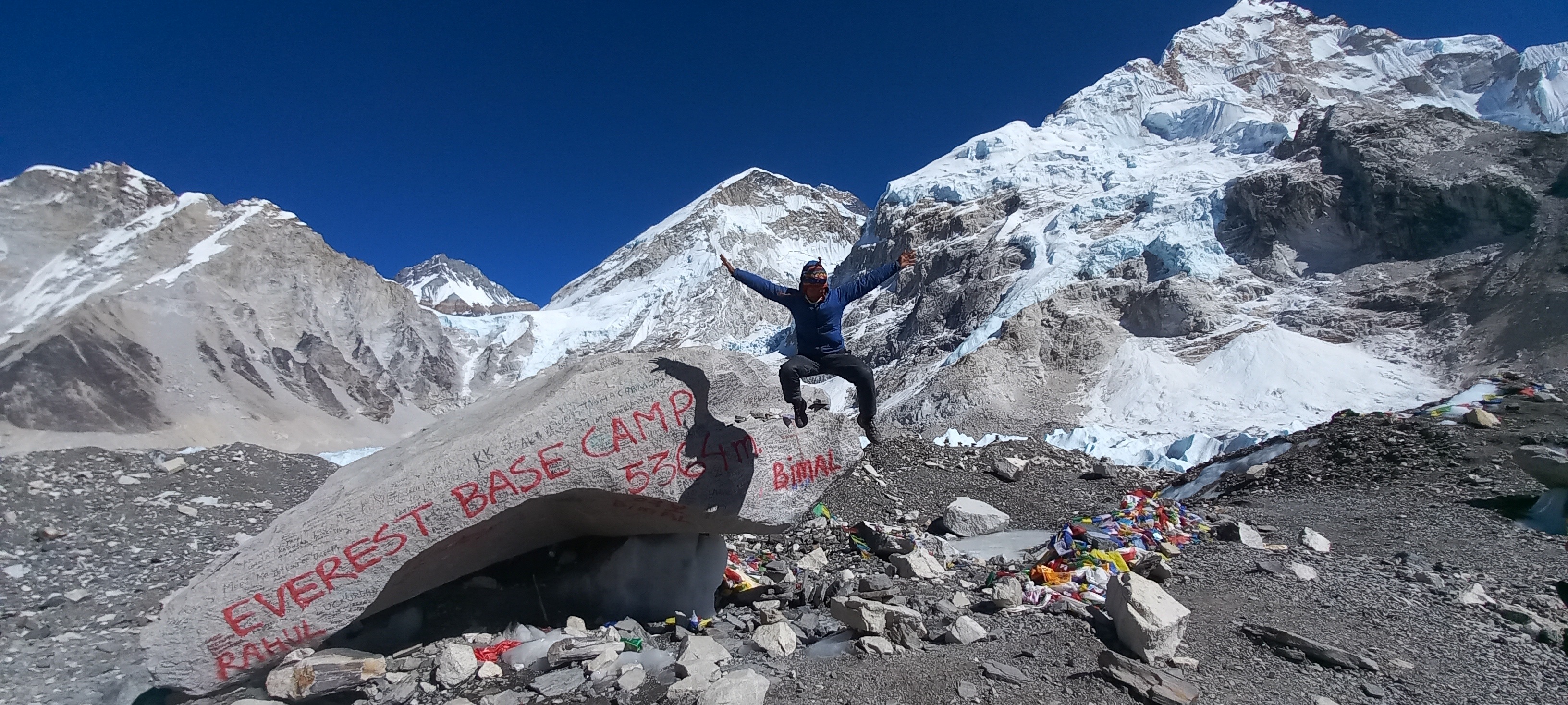
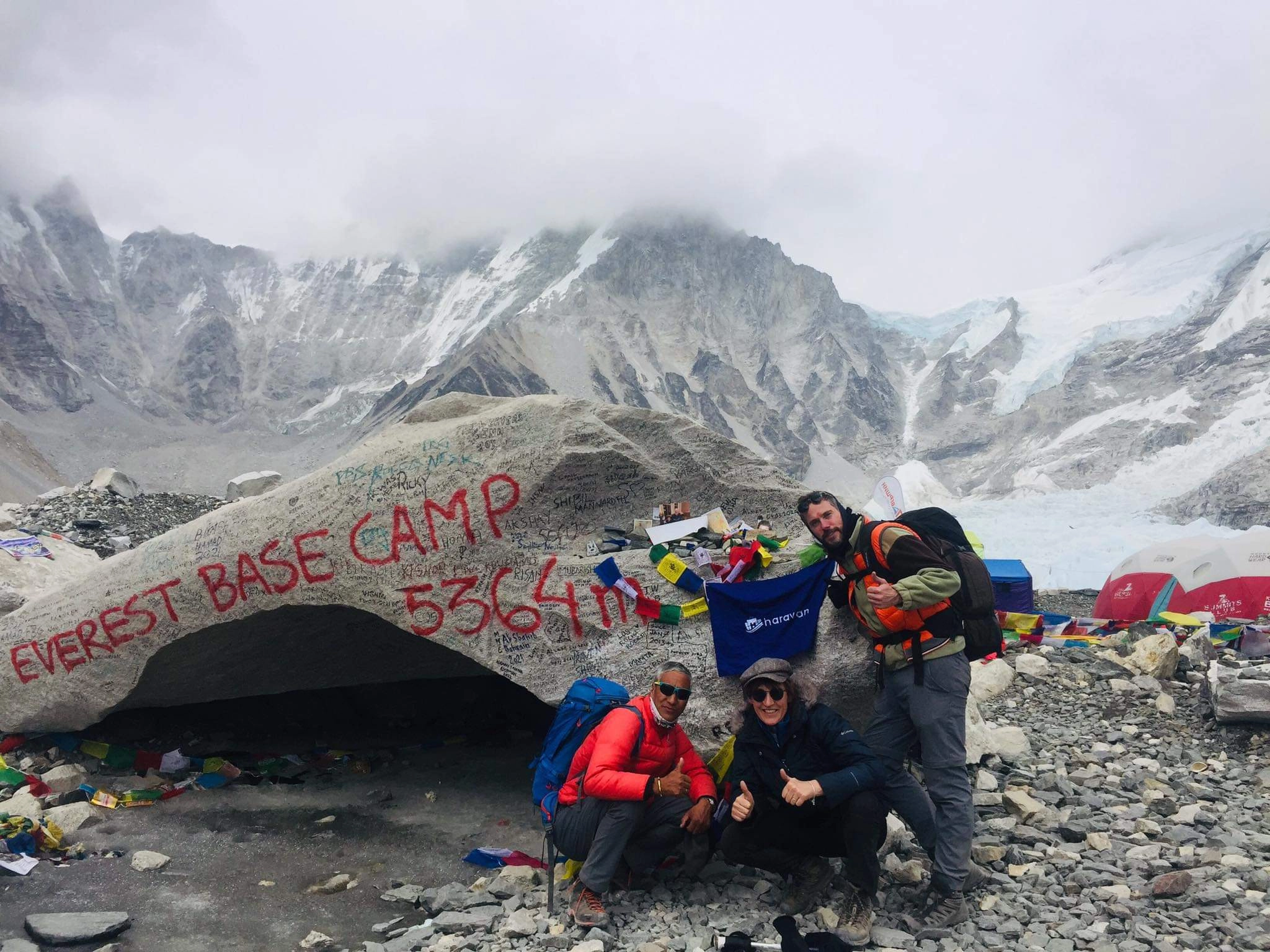
The defining moment of the expedition arrives at Everest Base Camp, situated at an elevation of 5,364 meters.

Standing at the foot of Mount Everest, surrounded by the vast expanse of the Khumbu Glacier and some of the highest peaks on the planet, is an experience that transcends ordinary travel. For many trekkers, reaching Base Camp represents years of aspiration, preparation, and determination.

Although the summit of Everest remains far above, the accomplishment of arriving at Base Camp is itself regarded as one of the greatest achievements in adventure travel.


Kala Patthar: The Ultimate Everest Viewpoint

While Everest Base Camp marks the official destination, many consider the ascent to Kala Patthar the true visual highlight of the journey.

Rising to 5,545 meters, Kala Patthar offers the most accessible and unobstructed panoramic view of Mount Everest. At sunrise, golden light illuminates Everest’s summit and the surrounding Himalayan giants, creating a spectacle widely regarded as one of the finest mountain vistas in the world.

For photographers and trekkers alike, it is often the defining image of the Everest experience.


Trek Overview

Category Details
Region Khumbu (Everest Region), Nepal
Duration 12–16 Days
Maximum Elevation 5,545 m (Kala Patthar)
Everest Base Camp Elevation 5,364 m
Difficulty Moderate to Challenging
Accommodation Mountain Lodges & Tea Houses
Best Seasons Spring (March–May) & Autumn (September–November)
Suitable For Adventure Travelers, Nature Enthusiasts, Photographers

An Enduring Symbol of Himalayan Adventure

For decades, the Everest Base Camp Trek has stood as one of the world's most prestigious trekking journeys. Its unique blend of natural grandeur, cultural richness, and personal achievement continues to attract adventurers seeking an authentic Himalayan experience.

More than a trek, it is a journey through living mountain culture, sacred landscapes, and some of the most extraordinary scenery on Earth. From the bustling streets of Namche Bazaar to the icy expanses of Everest Base Camp, every stage of the expedition offers moments of discovery, inspiration, and lasting memories.

For those seeking the ultimate Himalayan adventure, the Everest Base Camp Trek remains an experience unlike any other—a journey to the very doorstep of the world's highest mountain.

Similar Blogs

Horizontal orange line
NMA Peaks Nepal Climbing Permit
06 Apr, 2026

NMA Peaks Nepal Climbing Permit

There are 27 peaks regulated by the Nepal Mountaineering Association (NMA). A total of 33 Peak Permits were managed by NMA until the new regulation came in effect. Hence the NMA regulated peaks are termed as ‘Trekking Peaks’.

The title may suggest that these peaks are easier to climb than expedition peaks, but this is not necessarily true and they are technically very demanding.

Trekking Peaks actually provide a chance to climb in some of the most remote and unseen areas of Nepal. Climbing these peaks can also be technical and challenging.

In fact, the permit fee of NMA peaks vary according to the season and number of climbers in a group.

Seasons:

Some trekking peaks are possible to ascend during winter as well as spring and autumn because of its low altitude and accessibility.

Definition of Seasons:

The following months are considered as different seasons:

  • Spring: March, April, May

  • Summer: June, July, August

  • Autumn: September, October, November

  • Winter: December, January, February.

Preparation:

Preparation to climb a trekking peak is a lot simpler than any expedition. The climbing period for most of trekking peaks rarely exceeds more than a few days; so large amounts of base camp equipment are not usually necessary. The amount of climbing equipment required is a lot less because of its low altitude. In general, preparation for a climbing peak is a little different from preparing for an adventurous trek.

Nepal Visa Requirements
26 May, 2026

Nepal Visa Requirements

Nepal offers visas on arrival for tourists from most countries, as well as the option to apply for an e-visa in advance. Here are the key requirements and details:

1. Visa on Arrival (Available at Entry Points)

  • Eligible Countries: Most nationalities (except a few, like Nigeria, Ghana, Zimbabwe, etc.—check with the Nepalese embassy).

  • Entry Points: Tribhuvan International Airport (Kathmandu) or land borders (India/China).

  • Requirements:

    • Passport valid for at least 6 months.

    • Passport-sized photo (one copy, 1.5 x 1.5 inches).

    • Completed visa application form (available at entry points or online in advance).

    • Visa fee (must be paid in USD cash; other currencies may be accepted but at a less favorable rate).

2. E-Visa (Apply Online Before Travel)

  • Apply at Nepal’s Department of Immigration website.

  • Processing Time: Usually 3-5 working days.

  • Requirements:

    • Scanned passport copy.

    • Digital passport-sized photo.

    • Valid email address for confirmation.

    • Payment via credit/debit card.

3. Visa Fees (2024)

  • 15 DaysUSD 30

  • 30 DaysUSD 50

  • 90 DaysUSD 125

  • Multiple-entry visas are available for longer stays.

4. Extending Your Visa

  • Extensions are possible at the Department of Immigration in Kathmandu or Pokhara.

  • FeeUSD 3 per day (minimum extension of 15 days).

5. Important Notes

  • Yellow Fever Certificate: Required if arriving from a high-risk country.

  • Onward/Return Ticket: Sometimes requested by airlines.

  • Land Border Crossings: Popular entry points include Kakarbhitta (India), Birgunj (India), and Kodari (China-Tibet border).

6. Visa-Free Entry for Indians

  • Indian citizens do not need a visa but must show a valid ID (Passport/Voter ID).


Langtang Valley Trek: Nepal’s Hidden Himalayan Paradise Reckons Adventurers
21 May, 2026

Langtang Valley Trek: Nepal’s Hidden Himalayan Paradise Reckons Adventurers

KATHMANDU, NEPAL — Nestled in the northern Himalayan region of Nepal, the breathtaking Langtang Valley continues to attract trekkers seeking an authentic mountain experience away from the crowded trekking routes of the country. Known for its dramatic landscapes, rich Tamang culture, and stunning alpine scenery, the Langtang Valley Trek offers one of the most rewarding journeys in the Nepalese Himalayas.

Located within the protected area of Langtang National Park, the trek combines spectacular mountain views, lush forests, traditional villages, and centuries-old Buddhist traditions. The route provides visitors with an opportunity to experience both the natural and cultural treasures of Nepal in a relatively short yet unforgettable adventure.

A Scenic Journey into the Himalayas

The trek begins with a picturesque drive from Kathmandu to the mountain town of Syabrubesi, the gateway to the Langtang region. As trekkers leave the bustling city behind, winding mountain roads reveal terraced hillsides, river gorges, and distant Himalayan peaks.

From Syabrubesi, the trail gradually ascends through dense rhododendron and bamboo forests, crossing suspension bridges and following crystal-clear rivers fed by Himalayan glaciers. Along the way, travelers encounter waterfalls, wildlife, and traditional settlements that showcase the unique heritage of the Tamang people.

 
https://images.openai.com/static-rsc-4/1wT-1L2EwDS3tK6PAydKFucBG61TSXFsYrWZHtEML7WgbE0pN8G9UdOZcb1vyupL0SHOYsx0rUq5RemUadEyHWsfbPZv8FBh2g7TEaPhmeGLxiGSMRC4GTHeO3XLIshpcZtNkE3W9_FUbN49LXeRdF72nRR7C3rGkcHMzMP9ZWa6FIXlpq4l2HgNvrQxklGu?purpose=fullsize
https://images.openai.com/static-rsc-4/rvBiQz-g3bitpNmVQN542T-uwVMPCm3KVK5-s5rBpHF5ILdTFq5wBwEPL8wygICQisALRQUQ3ZmiQm2u4Hp0P9eolH2h0fa2S3W1vHOKG_EHBnjB8acTybbB2lym3o9wxiAQaK1oGPPFiEbjULlcPjI_iuBj_0KE778Zv3CEmB0nJ5NOwUrcDRCKKyU8WbVc?purpose=fullsize

Cultural Richness Along the Trail

One of the defining features of the Langtang Valley Trek is its strong cultural identity. The region is home to the Tamang community, whose traditions, language, and Buddhist heritage have been preserved for generations.

Prayer wheels, mani walls, and colorful prayer flags line the trekking route, offering visitors insight into the spiritual life of the Himalayan communities. Local tea houses provide warm hospitality and an opportunity to experience authentic mountain lifestyles while enjoying traditional Nepalese cuisine.

The resilience of the local people has also become a symbol of hope and determination following the devastating earthquake of 2015, after which many villages were rebuilt and reopened to trekkers.

Kyanjin Gompa: Jewel of the Langtang Valley

At the heart of the trek lies the beautiful alpine settlement of Kyanjin Gompa, situated amidst towering snow-covered peaks. This picturesque village serves as the final destination for many trekkers and is widely regarded as one of the most scenic locations in the region.

Surrounded by glaciers and rugged mountains, Kyanjin Gompa offers spectacular views and a peaceful atmosphere. Visitors can explore the historic monastery, interact with local residents, and enjoy panoramic vistas that stretch across the valley.

https://images.openai.com/static-rsc-4/JzGrLfnqcAir_9qL587VVbmqqcLbQIoCFgaaKOfUUSZCsykTDCn7iqy1-4vEu8fr2xE7DNZ_yIX8KUWzF6lqSub148o2iIxSkrJsyr588OEuRRbcsUAf4c9Oo0xkwr8PvE6Qutw2VNr08PAoJHun8RpdqKva1KowHObemuW1Q1LQi36sGRgbUv1m3xBOH1wu?purpose=fullsize
https://images.openai.com/static-rsc-4/cRyc56tIAFFG09T6AN46yzBxDeJR5pbZPY1b86u6pX1I79Z9ziwfOO-FRJwgU6YkFtITy9X6yodrGU9b6CH7-dGaveg-0MqdxOeSedjR9VZNICf81232pNphKRn6BbIPlTmGyq6KeGXCOzM325xN4_Jv4tmUmH-QYn8LCtmVpUgrL_a6ObJSKadL5hvAEGlA?purpose=fullsize

Spectacular Mountain Views Await

For those seeking additional adventure, optional hikes from Kyanjin Gompa lead to renowned viewpoints such as Tserko Ri. The summit rewards trekkers with breathtaking panoramic views of the surrounding Himalayan ranges.

Among the most impressive sights is Langtang Lirung, the highest peak in the Langtang region. Snow-covered ridges, glacial valleys, and endless mountain horizons create a scene that remains etched in the memories of visitors long after their journey ends.

A Perfect Trek for Every Explorer

Unlike some of Nepal’s more demanding trekking routes, the Langtang Valley Trek is considered suitable for both beginners and experienced trekkers. The moderate difficulty level, combined with exceptional scenery and cultural immersion, makes it an ideal choice for travelers looking to experience the Himalayas without committing to a lengthy expedition.

As Nepal's tourism industry continues to welcome visitors from around the world, the Langtang Valley Trek stands out as a destination where nature, culture, and adventure exist in perfect harmony.

Summary

The Langtang Valley Trek remains one of Nepal’s most captivating Himalayan journeys. From tranquil forests and traditional villages to towering mountains and sacred monasteries, the trek offers an unforgettable blend of adventure and cultural discovery. For travelers seeking a peaceful yet spectacular trekking experience, Langtang Valley continues to shine as one of the Himalayas’ finest hidden gems.